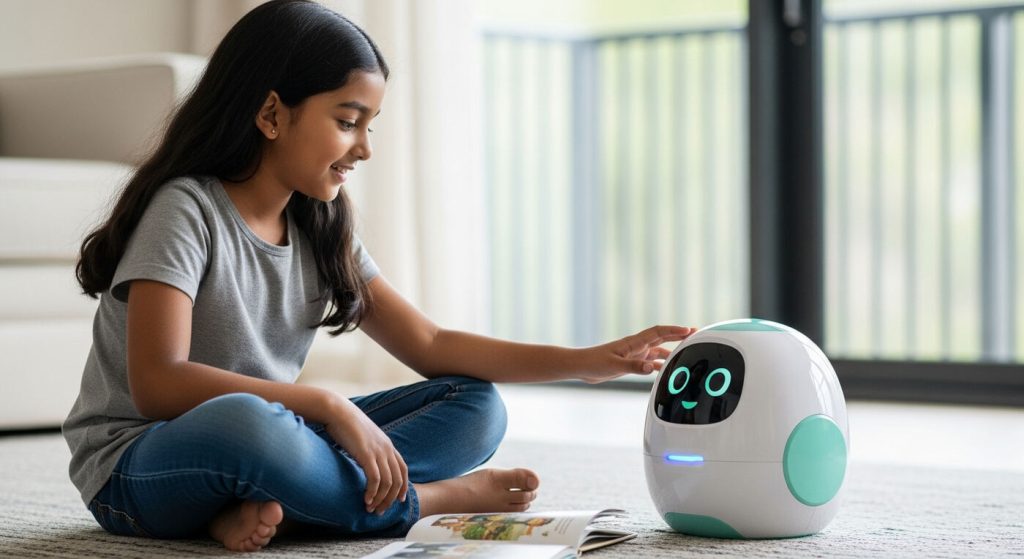
How Smart Toys Are Changing Children’s Play
The world of children’s play is rapidly evolving, and AI companion toys in 2026 are emerging as one of the most significant innovations in the toy industry. These are no longer simple talking robots or pre-programmed gadgets. Instead, they are interactive AI-powered toys for kids designed to learn, adapt, and engage in personalized play experiences.
From storytelling and educational support to conversational companionship, AI toys are reshaping how children interact with technology. For parents, understanding how these smart toys work—and what they mean for development, safety, and privacy—is essential before bringing one into the home.
What Are AI Companion Toys?
AI companion toys are smart interactive toys for children that use artificial intelligence to create adaptive, personalized play experiences. Unlike traditional toys with fixed responses, they can adjust based on a child’s behavior, preferences, and communication style.
- Can learn a child’s name, interests, and play habits
- Offer dynamic storytelling and conversational interaction
- Adapt difficulty levels in educational games
- Provide evolving responses instead of repetitive programming
These toys are part of a broader trend in AI-powered educational toys and smart learning devices for kids.
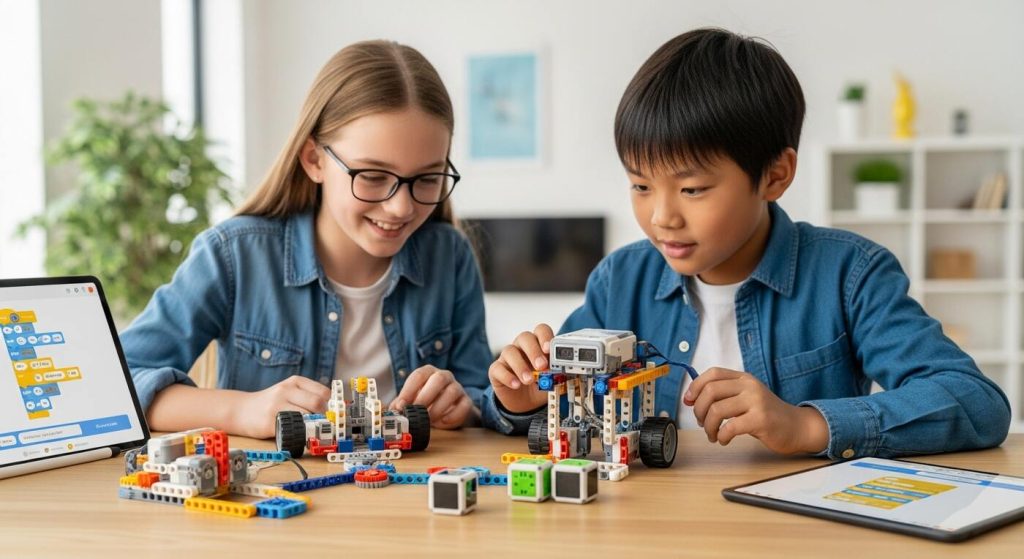
How AI Companion Toys Work
AI companion toys rely on several core technologies that enable intelligent interaction and learning over time.
Natural Language Processing (NLP)
Allows toys to understand and respond to spoken language, enabling realistic conversations and storytelling.
Machine Learning (ML)
Helps toys adapt to a child’s behavior, remember preferences, and improve interactions over time.
Sensors and Input Technology
Many AI toys use microphones, touch sensors, and sometimes cameras to respond to voice, movement, or physical interaction.
Cloud Connectivity
Wi-Fi or Bluetooth connections allow toys to access cloud-based AI systems for updates, learning improvements, and more advanced processing.
Benefits of AI Companion Toys for Kids
Best for: Learning support, emotional engagement, and imaginative play
AI companion toys can offer a range of developmental benefits when used appropriately as part of a balanced play environment.
- Supports early learning and STEM education through interactive play
- Encourages language development and communication skills
- Provides companionship and engagement, especially for shy children or only children
- Promotes creativity through storytelling, role-play, and imaginative scenarios
- Helps children explore basic emotional recognition and expression
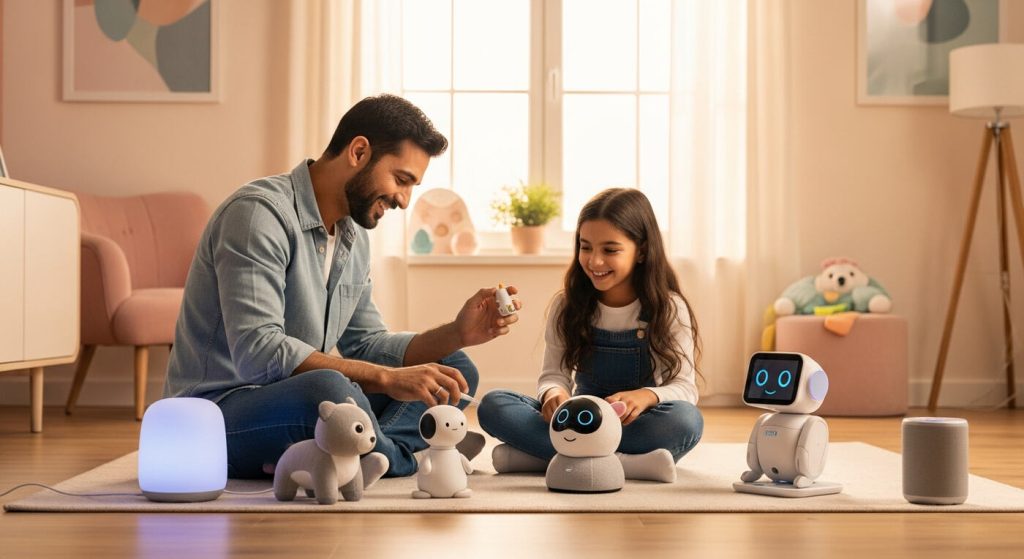
Parental Considerations Before Buying AI Toys
While AI companion toys offer exciting possibilities, parents should carefully evaluate key factors before introducing them at home.
Data Privacy in Smart Toys for Kids
Understanding what data is collected—such as voice recordings or behavioral patterns—is essential. Parents should review privacy policies and cloud usage practices.
Screen Time and Digital Balance
Even without screens, AI toys contribute to overall digital interaction time and should be balanced with offline, physical play.
Over-Reliance on AI Companionship
AI toys should complement, not replace, human interaction, family bonding, and peer social development.
Safety, Durability, and Design Quality
As with any children’s product, ensure materials are safe, non-toxic, and built to withstand regular use.
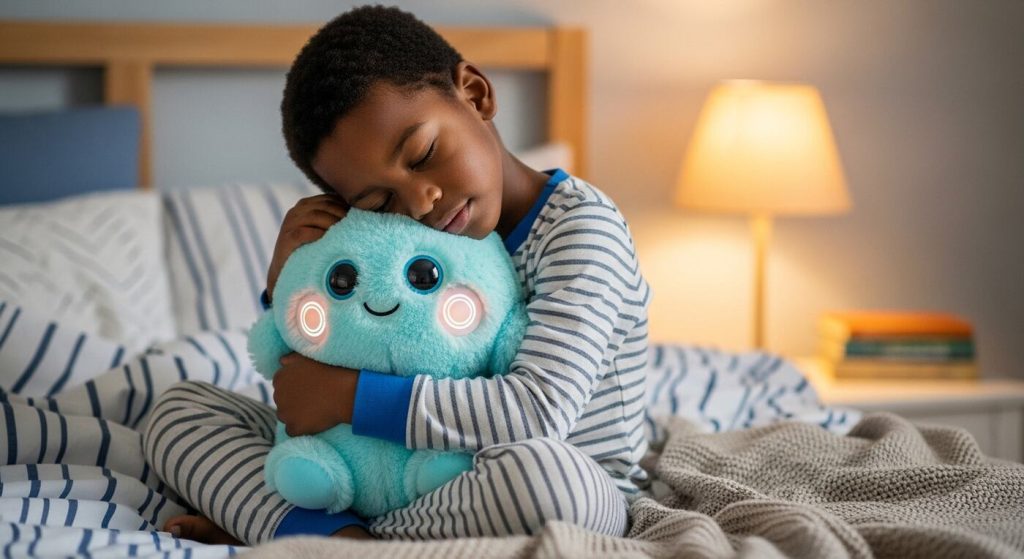
Recommendations for AI Companion Toys in 2026
AI companion toys in 2026 generally fall into a few major categories based on how they interact, learn, and support children’s play. Most combine conversation AI, adaptive learning, and sensor-based interaction, but differ in their purpose—from education to emotional engagement.
Choosing the Right AI Toy Category
When evaluating AI companion toys, parents typically consider:
- Purpose (education vs. companionship vs. creativity)
- Level of autonomy (guided responses vs. open conversation)
- Data privacy and connectivity (cloud-based vs. local processing)
- Age appropriateness and developmental fit
AI Learning Companion Toys
Best for: Educational support, language development, and structured learning play
These toys focus on helping children learn through conversation, quizzes, storytelling, and guided activities. They often adapt to a child’s age, progress, and interests using AI systems like natural language processing and machine learning.
- Interactive storytelling and reading support
- STEM learning (science, coding basics, problem-solving)
- Personalized feedback based on performance
- Often designed with child-safe, guided responses and parental controls
AI Emotional Companion Toys (Interactive Pets & Characters)
Best for: Imaginative play, companionship, and emotional engagement
These toys simulate personality-driven interaction, often behaving like pets or animated characters that respond socially to a child’s voice, actions, and tone.
- Recognize voices, names, and repeated behaviors
- Respond with emotional-style interactions (cheerful, curious, playful)
- Encourage imaginative role-play and storytelling
- Designed to feel like a “presence” rather than a fixed-function toy
AI STEM & Coding Play Kits
Best for: Older children interested in building, programming, and problem-solving
These toys shift focus from conversation to creation, letting kids learn how AI systems work through hands-on experimentation.
- Introduces basic coding and logic concepts
- Encourages building, customization, and experimentation
- Teaches cause-and-effect through programmable behaviors
- Often screen-assisted but not fully screen-dependent
AI Co-Creative Storytelling Toys
Best for: Creativity, narrative development, and collaborative play
A newer category where AI acts as a storytelling partner, helping children build and expand stories interactively.
- Co-creates stories with children in real time
- Adapts narrative based on choices and prompts
- Encourages imagination and decision-making skills
- Blends physical play (figures, cards) with voice interaction
The Future of AI in Children’s Play
AI companion toys represent a growing shift toward personalized, adaptive learning experiences in children’s entertainment technology. As the technology evolves, we can expect more emotionally responsive toys, deeper educational integration, and stronger safety frameworks for families.
However, the key for parents remains balance—using AI toys as tools that enhance creativity, learning, and engagement without replacing real-world interaction.