Every parent wants their child to build confidence in math, but traditional worksheets and memorization drills don’t always inspire curiosity. In fact, for many children, math can feel intimidating or disconnected from real life.
The good news? It doesn’t have to be that way.
In 2026, early childhood education continues to embrace play-based learning as one of the most effective ways to teach foundational math skills. When math is introduced through games, hands-on activities, storytelling, and exploration, children don’t just learn faster — they actually enjoy the process.
Instead of asking children to “do math,” we can invite them to play with math, helping them naturally develop skills in counting, patterns, shapes, problem-solving, and logical thinking.
This guide explores how to build early math confidence in children ages 4 to 8 through fun, engaging, and developmentally appropriate play-based activities.
Why Play Is So Powerful for Learning Math
Young children learn best through hands-on experiences. Play activates curiosity, reduces fear of mistakes, and encourages experimentation — all essential ingredients for learning math successfully.
When math is part of play:
- Children explore numbers naturally
- Problem-solving feels like discovery, not pressure
- Mistakes become part of learning
- Confidence grows through repetition and fun
Most importantly, children begin to see math not as a subject, but as a tool for understanding the world.
Everyday play already includes math:
- Building towers with blocks (geometry & balance)
- Sorting toys by size or color (classification)
- Playing pretend store (addition & subtraction)
- Counting steps, snacks, or toys (number sense)
Key Principles of Play-Based Math Learning
1. Exploration
Let children freely experiment with objects, numbers, and patterns.
2. Hands-On Interaction
Use physical tools like blocks, shapes, and board games to make abstract ideas tangible.
3. Problem-Solving Through Play
Introduce gentle challenges that require thinking, not memorization.
4. Visual Thinking
Encourage drawing, building, and arranging to represent math ideas.
5. Conversation
Talk through thinking processes to build reasoning skills and confidence.
Best Math Learning Activities and Toys for Kids (Ages 4–8)
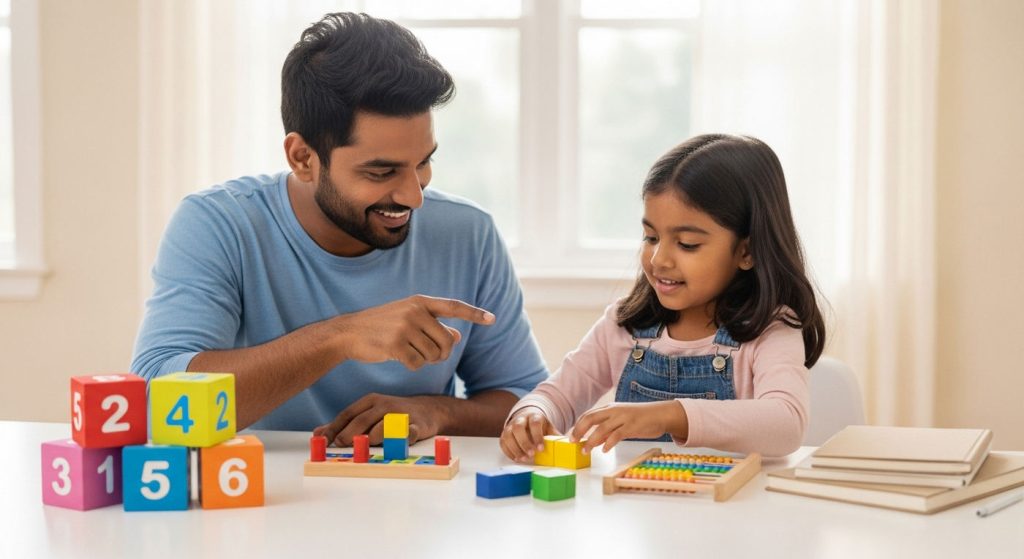
Counting and Number Blocks
Best for: Early number recognition, counting, and simple arithmetic
Wooden or tactile number blocks help children physically connect numerals with quantities. By stacking, sorting, and counting objects, kids build strong foundational number sense.
Why it works:
- Reinforces one-to-one counting
- Strengthens fine motor skills
- Encourages hands-on exploration
- Builds early addition and subtraction understanding
Shape Sorting Toys
Best for: Preschool geometry, spatial awareness, and pattern recognition
Shape sorters introduce children to basic geometry in a playful, intuitive way. Matching shapes to corresponding spaces helps develop logic and visual discrimination skills.
Benefits include:
- Shape recognition
- Hand-eye coordination
- Early spatial reasoning
- Problem-solving skills
Pattern and Logic Blocks
Best for: Pattern recognition, symmetry, and early STEM thinking
Pattern blocks allow children to create designs while learning mathematical structure. Kids can build mosaics, copy patterns, or invent their own designs.
What children learn:
- Repeating patterns
- Symmetry and balance
- Spatial relationships
- Logical sequencing
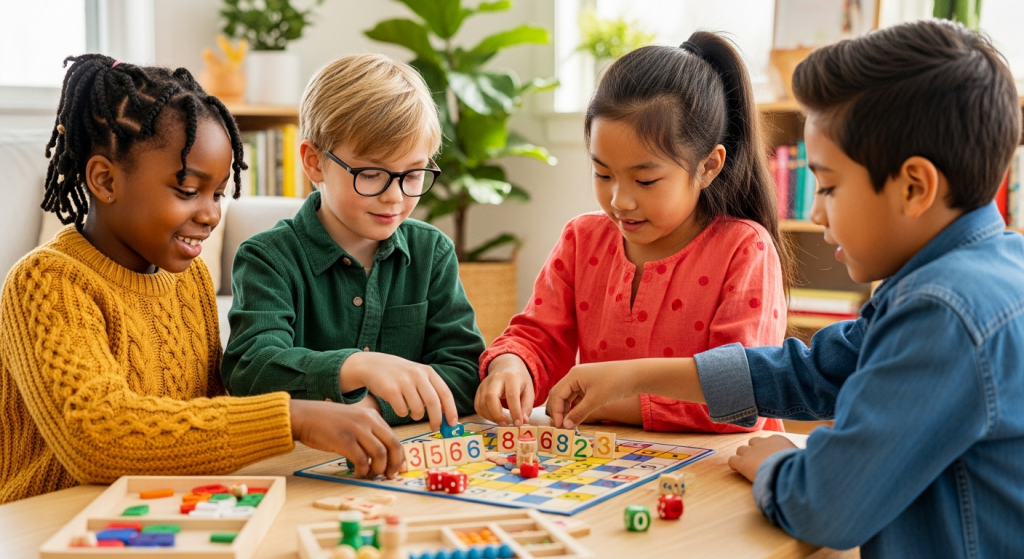
Family Math Board Games
Best for: Practicing arithmetic and developing strategic thinking
Board games that involve counting, movement, or simple calculations make math social and interactive. When families play together, children learn without realizing they are practicing math skills.
Key advantages:
- Encourages friendly competition
- Reinforces addition and subtraction
- Builds patience and turn-taking
- Strengthens number fluency
Real-Life Math Activities (No Toys Needed)
You don’t need special materials to teach math. Everyday life is full of learning opportunities:
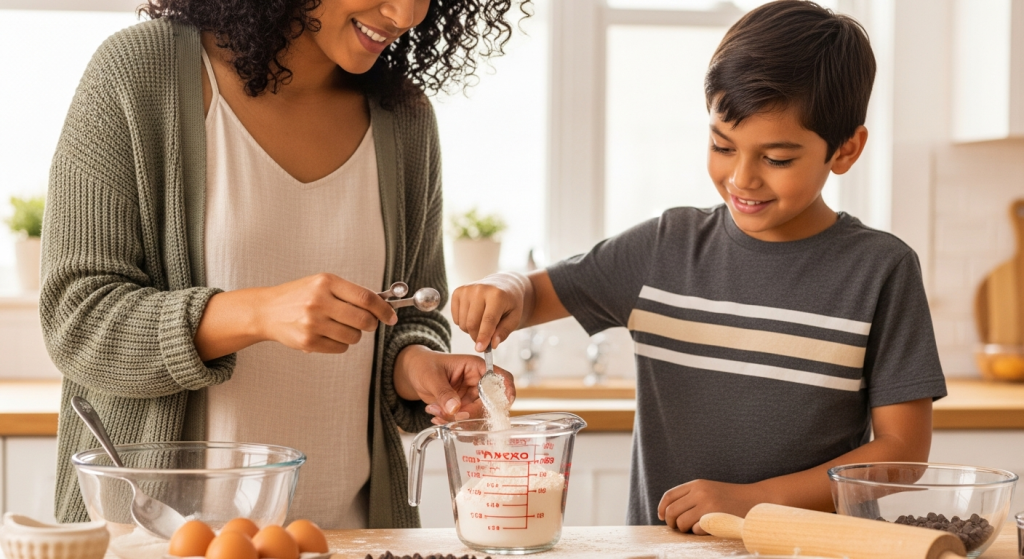
- Cooking (measuring ingredients)
- Grocery shopping (counting and comparing prices)
- Building with household items
- Playing store or restaurant games
- Nature walks (counting leaves, steps, or patterns)
How to Make Math Feel Like Play (Not Schoolwork)
Keep it pressure-free
Focus on exploration, not correctness.
Celebrate effort, not just answers
Praise thinking and problem-solving.
Follow your child’s curiosity
Let them guide the activity whenever possible.
Mix learning into daily routines
Short, natural interactions are more effective than long lessons.
Use storytelling
Turn math problems into fun stories or adventures.
FAQ
What age should I start teaching my child math?
You can begin as early as toddlerhood with simple counting, sorting, and shape recognition. Structured math play typically becomes more effective between ages 3–5.
What if my child dislikes math?
Start with play-based activities that don’t feel like math at all. Games, building toys, and storytelling often help reduce anxiety and build positive associations.
How often should kids practice math?
Short, consistent exposure is best — even 10–15 minutes a day through play or real-life activities can be highly effective.
Are educational toys necessary for learning math?
No. While toys can help, everyday activities like cooking, shopping, and playtime offer just as many opportunities for learning math naturally.
How do I help a child who struggles with math confidence?
Focus on encouragement, patience, and small wins. Avoid pressure and emphasize that mistakes are part of learning.
Final Thoughts
Helping children build a strong foundation in math doesn’t require worksheets, pressure, or strict lessons. It requires curiosity, creativity, and play.
When math becomes part of a child’s everyday world — something they explore through games, toys, stories, and real-life experiences — it transforms from a challenging subject into an enjoyable skill.
By making math playful, you’re not just teaching numbers. You’re building confidence, problem-solving ability, and a lifelong love of learning.
And that may be the most valuable math lesson of all.